Header

Road biking, dirt road riding on Frankenbike, tandem riding, group riding, time trialing, randonneuring - I love to ride, and I love to write. As I've traveled along on two wheels, I've learned one thing: Expect Adventure. Join me on the journey!

Betty Jean Jordan

Tuesday, May 18, 2021

Ocmulgee Pedal-Paddle

After cycling, my favorite outdoor activity is kayaking.  I don't kayak as much as I'd like, and so I'm glad when I do get out on the water.  The Georgia River Network hosts a number of paddling events during the year.  These weren't on my radar screen until I received an e-mail that mentioned a new type of event for pandemic times, the Pedal-Paddle.  Instead of taking a shuttle with a bunch of other people, you ride your bicycle from the outtake to the put-in.  I checked the 2021 Pedal-Paddle schedule and selected the one on the Ocmulgee River Saturday a week ago.  I loved it.  I knew I would.

Robert kindly let me use his 4Runner and even hooked up the trailer for me.  One reason we got the trailer was to make it easier to carry out kayaks (rather than muscling them into the rack on top of the truck).  I carried my cyclocross bike in the back of the 4Runner.  I opted for it instead of my road bike because the last part of the pedal portion of the pedal-paddle was to be on a dirt road.

I drove to the put-in, about eight miles north of Abbeville.  Joe Cook coordinates the Georgia River Network events.  He had provided directions to the launch site, Ochise Landing, noting that it is close to another launch site and not to go to the other one.  Because he provided GPS coordinates to the correct site, I used those to navigate.  That worked great.  However, right before the final turn onto the dirt road, a bridge was out!  Fortunately, Joe had provided his cell phone number, and so I called him and found out the new launch site, which was the other site that he had originally told us not to go to (the Dodge County public boat ramp).  He and the other volunteers hadn't discovered that the bridge that was out until the night before.  I guess I didn't get the group text about the changed location.  No worries, though.  I made it to the Dodge County public boat ramp in plenty of time.

Pedaling

After dropping off my kayak, I drove to Half Moon Landing in Abbeville, our takeout.

From there, I rode my bicycle to the put-in, about 11 miles away.  Along the way I passed this local wild boar hunting company.
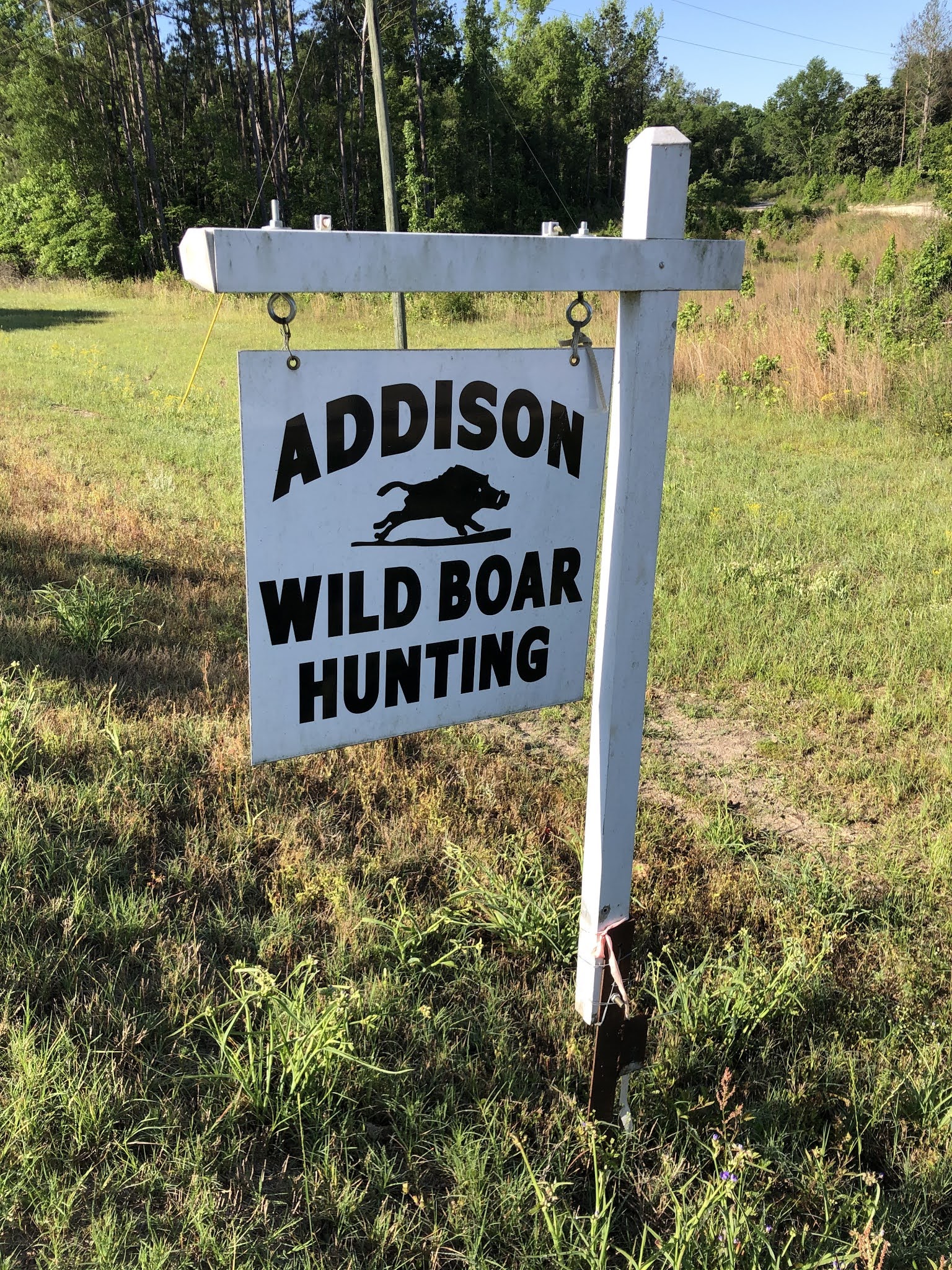
That was supposed to be the day of the Abbeville Wild Hog Festival, but because of the pandemic they postponed it until the fall.  I was sad to miss it.

I was one of the first people to arrive at the launch site.

It wasn't hard to stay entertained while I waited.

Several roosters were running around.

I noticed a sign on the light pole next to the boat launch.  The fisherman who happened to be standing there gives perspective to the flood height on 7/10/94.  Although I was still in Atlanta during the Great Flood of 1994, I certainly remember how it affected Middle and South Georgia.


One of the volunteers said he was going to walk to the end of the road to cheer on people as they arrived.  That sounded like fun, and so I followed suit.  We were on River Road.  I was amused by this appropriately named family who lives here:

I wonder if they know about the Bass Pro Shop on Bass Road in Macon.  (The road was already there when Bass Pro Shop moved in.)

As I continued walking along the road, I passed a field of cows.  They came running toward me.

I'm sure they thought I was going to give them something to eat.  Alas, I didn't have any food, but I got to pet a couple on the nose.

As everyone arrived, volunteers loaded our bicycles onto a trailer for transport back to the takeout.  That's my Cannondale on the outside.

Paddling

Joe gave a brief overview of our paddling journey.  He also introduced two young women from the Adopt-A-Stream program with the Georgia Environmental Protection Division.  Adopt-A-Stream is a citizen outreach program to educate and involve the public in protecting our waters.  These young women collected water samples throughout the day to measure pH, dissolved oxygen, macroinvertebrates, and other parameters of stream quality.  Finally, we got into the water!

The Dodge County public boat ramp is on a partial oxbow lake.  When the river is lower, this site is disconnected from the main Ocmulgee River channel.  That's why the original plan was to launch from the newer Ochise Landing.  Fortunately, we had enough flow that day to paddle from here.

Joe had us go upstream instead of downstream because the brush is heavier on the downstream end of the oxbow.  It was about a half-mile paddle upstream to get to the cut through, i.e., the main river channel.  I really hadn't given much thought to the effort of paddling upstream, but after we turned downstream, it definitely was easier.

Approaching the cut through

I thoroughly enjoyed being on the water.  Every time I paddle, I wonder why I don't do it more often.  And how great to get to explore a portion of the Ocmulgee River I hadn't been on before!

Georgia Geography

While we paddled, I chatted with Joe about Georgia geography.  Here's a fun trivia question he asked me: If you travel on I-16 from Macon to Savannah, you cross five major rivers.  What are they?  Hint: They form the acronym COOOO (not in that order geographically).

Answer: (geographically from west to east): Ocmulgee, Oconee, Ohoopee, Canoochee, and Ogeechee

He also said that there are 31 counties in Georgia that aren't named for dead white guys.  Based on my post-paddle Interwebs research, I could only find 13 that aren't named for dead white guys (maybe Joe had his digits reversed).  I think I thought of most, if not all, of them while I was paddling: Catoosa, Chattahoochee, Chattooga, Cherokee, Coweta, Hart, Liberty, Muscogee, Oconee, Peach, Rockdale, Seminole, and Union.  As you can see, most of these counties have Native American names.  Only one Georgia county is named for a woman: Hart for Nancy Hart, a heroine from the American Revolution.  By the way, Georgia has 159 counties total, more than any state but Texas.  It also has more Native American place names than any other state.

One more Georgia geography tidbit that I've been thinking about: many Georgia cities and counties have the same name but are in different geographical locations.  For example, we've gotten phone calls about cheap land in Jasper.  Yes, land costs less here in Jasper County, located in Middle Georgia, than in the City of Jasper, located in the mountains of North Georgia.  I couldn't find a list of noncorresponding Georgia cities/towns and counties, and so I compiled my own.  The index of the Georgia DOT road map was a great resource for finding some tiny, unincorporated towns to include.  (Note that I included only names that are exactly the same.  There are even more examples if you include names like Waynesboro, which is not in Wayne County.)

  • Appling
  • Baldwin
  • Bartow
  • Brantley
  • Brooks
  • Butts
  • Calhoun
  • Candler
  • Cobb
  • Colquitt
  • Clayton
  • Crawford (and to confuse things, there's also a Crawfordville, which is in Taliaferro County, which is pronounced "Tolliver")
  • Dawson
  • Decatur
  • Douglas
  • Evans
  • Forsyth
  • Franklin
  • Gordon
  • Haralson
  • Jackson
  • Jasper
  • Jefferson
  • Jones
  • Lanier
  • Lumpkin
  • Macon
  • Madison
  • McIntosh
  • Mitchell
  • Monroe
  • Morgan
  • Newton
  • Oconee
  • Oglethorpe
  • Pulaski
  • Putnam
  • Quitman
  • Screven
  • Stephens
  • Towns
  • Union
  • Washington
  • White
  • Worth
I may have missed one, but this is certainly enough confusion.  Oh, and don't forget that there are two towns named Pine Mountain, one near Callaway Gardens on the western side of Georgia and one in the mountains in the very northeast corner of the state.  OK, now back to my paddling report.  Sometimes you just have to go with the flow :)

A Slough of Fun

After a while, Joe asked the group if we wanted to do some exploring.  Of course!  He led us into the first of several sloughs we paddled through.  A slough is a swamp adjacent to the river.  Sloughs aren't accessible when the river is down during the summer.  On the other hand, on this trip when the river was relatively high, there were almost no sandbars for stopping - kind of a tradeoff.  I was glad to learn about the sloughs, though.  They were magical.


Joe spotted the nest of a yellow-crowned night heron:


It was hard for me to see the heron in the trees, much less get a photo.  Joe got a good picture:

Photo credit: Joe Cook

Next, our group paddled through this "gateway" to our lunch spot in the slough.


This was the last place I expected to see a deer stand!  It must usually be dry in this area during deer season in the fall.


We all parked our boats for lunch.


View of the main Ocmulgee channel from the slough where we stopped for lunch

One of the paddlers made a friend!  (Cope's gray tree frog)


I see you!
Photo credit: Joe Cook

After lunch we continued down the river.  Someone pointed out this pretty aquatic plant.  Later, I entered this photo into my iNaturalist app (great app for IDing plants and animals!) and learned that it's floating marsh pennywort.


One of the paddlers had brought her 5-month-old puppy with her.  The puppy made the best paddling companion!


Time to explore another slough:


Cypress knees

My knees (and helmet in the bottom of my kayak)

I had so much fun playing in the sloughs that I was one of the last ones out.  I caught up to the group and saw that they looking intently at something.  It was a nest of baby herons.  As before, I didn't get a very good photo, but Joe did!

Photo credit: Joe Cook

Sneaky: Snakes and Otherwise

One of the last places we visited was Poor Robin Spring, just off of the river.  The spring pumps water from the Floridan aquifer.  It once was a recreation site, but today a company owns it that produces bottled spring water.  We paddled close enough to step out onto the embankment and view the bright blue water.


Back out on the main river is the former site of Poor Robin's Ferry.  The Georgia River Network provided some interesting history of this location:

On May 8, 1865, Confederate President Jefferson Davis, his family, and a small entourage crossed the Ocmulgee here on what was then known as Brown's Ferry.  Davis, having been forced from the Confederacy's Richmond capital a month earlier, hoped to make it to the west and rally the remains of the Confederate Army there.  Meanwhile, the Union Army, believing that he was complicit in the April 15 assassination of President Lincoln, was in hot pursuit.  And, soldiers were especially interested in the $100,000 bounty for his capture.  On the morning of May 10, Davis was captured about 26 miles southwest of Abbeville.  Even surrounded, Davis attempted to flee under the cover of his wife's overcoat but was quickly apprehended.  His capture in a woman's clothes was exploited with much hyperbole as northern newspapers depicted the incident with Jefferson in a wig and hoop skirt.  The dramatic capture led to a popular song of the era, "Jeff in Petticoats," with the lyrics: "Just on the outskirts of a wood, his dainty shape was seen.  His boots stuck out, and now they'll hang old Jeff in crinoline!"  Davis was never executed.  He spent more than two years in jail and became a symbol of Southern nationalism during Reconstruction.

What an interesting coincidence that our Pedal-Paddle adventure was on the same date that Jefferson Davis crossed the Ocmulgee, May 8.  And it sounds like politics now is as icky as it's always been.

Speaking of snakes, we got to see a live one back on the main river channel.  At first I thought it was a rattlesnake, but it was just a nonvenomous brown watersnake.  Again, I'll defer to Joe's much better picture than mine:

Photo credit: Joe Cook

I watched it for a bit, but I missed the most exciting part.  Someone else said it dove into the water and came back up with a fish in its mouth!

One other snake-related note: I learned about a bird species unfamiliar to me, the snakebird or, more formally, the anhinga.  It swims through the water with only its long neck exposed, making it look like a snake.  It has specialized muscles and a hinge in its neck.  When an unwary fish swims near, the anhinga's head darts forward and impales the prey.  Although I didn't get to see an anhinga in the water, I learned about it as one flew by and another paddler told me what it was.

If at all possible, get out and experience Georgia's rivers.  As I was paddling, I marveled at their astonishing beauty and how seemingly few people know about this wonderful treasure.  If you'd like to enjoy and protect our rivers, check out and support the Georgia River Network, https://garivers.org/.

Sunday, May 2, 2021

Kissing Bridge Classic

Yesterday was the Kissing Bridge Classic, a new gravel race in Meriwether County hosted by Chainbuster Racing.  I've ridden a little in Meriwether County but only on paved roads.  I really enjoyed getting to ride on some dirt roads in this beautiful part of the state.

James is one of our new friends in the Macon cycling community.  He mapped out the route for the Kissing Bridge race.  I liked it a lot.  The terrain wasn't too difficult (gently rolling), but it had a number of punchy climbs that I used to my advantage because I'm a good climber.  Every time I got to a hill, I tried to go up it hard to gain a few seconds on the competition.  The route was also technical for a gravel race because there were so many washboards, gravelly ruts, and potholes that required constant concentration.  I think this helped me to keep my mind in the race - don't let up, don't let up...

Robert and I headed out early yesterday morning for Fitzgerald Fruit Farm, the staging area for the race.  There was a long option (61 miles) and a short option (30 miles).  There were also various classes for male and female, including open, masters, single speed, Clydesdale, and ebike.  Robert and I both raced masters.  Because more men race, their masters classes were divided into Masters (40-49), Grand Masters (50-59), and Ultra Masters (60+).  All the Female Masters (40+) were in one class.  Groups started at two-minute intervals.  I was in the second wave, which included Long Masters and Long Female Masters.

It was a short roll to a nearby dirt road where we lined up by class.  Signs indicating the various groups were placed along the dirt road before the start line.  At first I didn't realize that Female Masters were starting with Masters (40-49).  As several men gathered near us, I joked to Sue, another Female Masters racer, that there sure were some ugly women in our race.  A few minutes later, I realized that the two groups were together and explained my initial confusion.  One of the guys had overhead my comment to Sue and said that he thought I was just being mean about the women in our race!  I told him that I hope I would never be mean like that.  We all had a good chuckle.

There was another funny moment in the staging area.  A woman wanted to know the mileages where the aid stations would be and asked other nearby riders, "Where are the stoppy things?"  A guy reached over, squeezed her brakes, and said, "Right here."

I was glad for the lightheartedness because I tend to get worked up before a race.  As I was writing this race report and looking at the Chainbuster Racing website, I found their words of wisdom about racing in general:

"Don't overthink it.  Racing is both a challenge and a time to cut loose and play.  Intensity can overtake intention and suck the fun out of anything, but our hope is that you reconnect with freedom of movement and find new ways to challenge yourself."

I'm going to remember these words for the future.

My group started at 9:02 AM.  The race director had noted a large mud puddle within the first mile.  When I got there, I rode to the right side of the road to avoid the puddle.  Just then, a guy flew past me on the left, splashing mud all over me.  Oh, well.

I rode solo a lot, but occasionally I got to ride with another rider, a few others, or even a bonafide peloton.  Every time I rode with others, I took as much advantage as I could of drafting and picking up time.  I was pretty sure I was in the lead for Female Masters.  However, I had to be wary of slowing down or losing focus.

I remembered how much proper fueling had helped me in the Maysville race last month.  Therefore, I was diligent about fueling yesterday.  One of my bottles had Beta Fuel, which is the highest-octane powder mix that Robert and I use.  (The other bottle had plain water.)  I also carried an unwrapped Clif Bar in my jersey pocket.  Next time I'll carry it in the wrapper (torn apart ahead of time) because I think that will keep it from sticking to my jersey.  About halfway through the race, I was trying to fish out the bar.  I managed to tear off a large chunk.  I thought I had packed some kind of chocolate flavor, but when I looked at it, it wasn't dark like the brownie flavor, and I didn't even seen any chocolate chips or chunks.  I put it in my mouth but couldn't discern the flavor, just vague sweetness.  I decided that it was a calorie-flavored Clif Bar.  Whatever it was, I was going to eat it.  By the way, I checked the wrapper when I got back to the car.  It was, in fact, a Chocolate Chunk with Sea Salt Clif Bar.  Sometimes bike food can taste weird or even icky during an intense event.

Later in the race, I caught up to Beth White, whom I met a few years ago on a brevet.  She was in the Open Female class, which had started with the first wave.  We rode together off and on for much of the rest of the race.  Often during a race, I get a a snippet of song stuck in my head.  This time I kept singing in my head, "Beth White," to the tune of "Meg White" by Ray LaMontagne.

About two miles before the end of the race, we crossed the Red Oak Creek Covered Bridge, known locally as the eponymous "kissing bridge."  It's the longest and oldest covered bridge in Georgia, and with a span of more than 410 feet, it's also one of the longest covered bridges in the South.

As I approached the bridge, I thought about Horace King, who built it in 1840.  He's a fascinating person.  I first learned about him in 2018 when I saw him on a mural entitled Native Waters, which runs the length of an entire block of DeKalb Avenue on the east side of Atlanta. The mural includes a picture of him and the words "Horace King - Bridge Builder."  I was inspired to learn more about him.  He was born a slave, but his owner saw how brilliant he was and taught him to read, write, and build bridges, which was illegal.  Horace King was the most renowned covered bridge builder in the South.  He was so proficient that he earned enough money to buy his freedom.  I thought I remembered reading that none of his covered bridges still stand in Georgia, but I was mistaken.  When I learned that he built the "kissing bridge" that we would visit in this race, I was very excited.

The kissing bridge seemed a lot longer than I expected as I rode my bicycle through it.  That's because I went from a bright, sunny day into the dark interior of the covered bridge.  All I could do was hold as straight a line as I could, right down the center, and pray I didn't hit the close boards that ran parallel on either side.  I was grateful to make it safely all the way across!

I've been in good form the past few weeks.  Form comes and goes.  You can't really control it, and so you just have enjoy it while you have it.  The best is when it coincides with a race!  I had ridden hard and steady the whole race without redlining.  It was enough to put me across the finish line first!


Fitzgerald Fruit Farm was such a neat place to have the race.  It was buzzing with activity afterwards.  Robert and I got BBQ from a food truck.  Then, we went into the open-air farmers market and got some peach ice cream and freshly picked strawberries.  (I would have picked my own strawberries if I hadn't just raced 61 miles.)


Saturday, April 24, 2021

A Century of Centuries

Last Saturday I rode the Bicycle Ride Across Georgia (BRAG) Spring Tune-Up (STU).  Besides a few RUSA rides, which resumed last September, it was the first organized ride I've done since the pandemic started.  RUSA events have been very small (a dozen people or fewer) with staggered start times.  The BRAG STU last Saturday had several hundred people.  However, I felt comfortable at the STU because I rode solo, I was socially distanced from the few people who were at the rest stops when I was, and food was packaged and handled safely.  Also, a show-and-go start minimized people clustering together at one time.

As an introvert, I've largely been fine with the reduced social contact caused by the pandemic, but it was nice to interact with some other cyclists last weekend.  My first encounter was while I was driving to the Sunflower Farm, the staging area for the BRAG STU, about a half-hour drive from home.  The shortest route to the start took me down several miles of dirt rode.  I saw a cyclist riding toward me.  He flagged me down.  He was also an STU rider and said he had gotten turned around.  Could I help?  Sure!  I pulled up Google Maps on my phone and pointed out where to go to get back on the route.  Fortunately, he hadn't gone too far out of the way.  We chatted for a few moments.  He said that he was from Birmingham and that everyone calls him Boss Hogg, as in The Dukes of Hazzard.

I drove another few miles to the Sunflower Farm.  It's the perfect venue for this event.  It has a huge field for camping as well as car and RV parking.  I quickly got my bicycle and gear ready and pedaled off on the century route.

I started passing other riders.  Hey, I think I recognize one - is that Boss Hogg?  Yes!  We said hello to each other again and rode side by side for a while.  He was quite a hoot.  And amazingly, he's 78!  I want to still be riding when I'm 78.

About 23 miles into the ride, the 60- and 100-mile routes split.  I definitely would be riding solo for the rest of the ride.  I did see a few other cyclists, though.  I approached one on the big climb out of Hard Labor Creek State Park.  A long ponytail made me think it was a woman at first, but as I got closer, I saw huge, muscular calves and realized that it was a dude.  I said hello as I pedaled by, and he responded in a very pleasant Aussie accent.

I didn't stop at the first few rest stops, waiting until the third one around mile 40 at a park in North High Shoals.  The volunteers had just arrived.  No worries - a few other riders showed up right after I did, and we helped unload the truck.

A little something to improve my personality

I enjoyed talking with the other riders, including Mr. Aussie and a nice guy from Jacksonville who looked like Garth from Wayne's World.

I continued on.  It was a cool but pleasant day.  It was also really nice being on my Factor instead of my Trek.  I love both bikes, but they serve different purposes.  I ride my Trek on self-supported permanents, carrying all my provisions in my Yogi Bear picnic basket.  Today, however, I had the luxury of restocking at rest stops, allowing me to ride my significantly lighter Factor.  I felt like I was breezing along with hardly any effort.

I estimated that I needed only one more rest stop.  I chose the one in Rutledge at about mile 78.  The famous BRAG STU Oreo Farm unofficial rest stop was only a couple of miles farther.  I definitely wanted to stop there, too, but I wasn't sure if it would be open because of the pandemic.  Better to stop in Rutledge to make sure I got enough to eat.  Happily, the Oreo Farm rest stop was also open!  For years, the couple who lives here has offered free Oreo cookies and adult beverages to BRAG STU riders on their way by.  Currently, they don't have any Oreo cows (belted Galloways), and their adult son stood in for them this time, but it was so nice that this tradition is still going.  Usually, they have Bloody Marys, but last Saturday it was just beer.  Not that I was complaining.

It was only 20 miles to the end.  Ha ha! I remember the first time I rode 20 miles at one time and thought that was a lot -  more on that in a minute :)

BRAG had mailed an event packet ahead of time so that we didn't have to do in-person check-in.  I saw that there would be food trucks, and one was Vietnamese.  I had heard of banh mi but had never had a chance to try one.  So, ever since my packet had arrived in the mail, I had been looking forward to a post-ride banh mi.

After changing clothes, I walked over to the food truck area, wearing the sporty mask that BRAG had given me rather than the usual T-shirt.  For some reason, the mask was huge.  I had to twist the ear loops twice to get it to stay on.

I got in line, anticipating a delicious banh mi.  A few minutes later, the woman in front of me said that she was the last customer, and then the Vietnamese food truck was shutting down for a few hours.  Bummer!  I was about to head home and certainly didn't want to wait around.  My consolation prize was a fried peach pie from another vendor, The Caboose from nearby Rutledge.  Not too shabby.

There was a live music stage by the food area.  Another rider had commented on how good the bands were the night before.  The guy playing while I was in the food line was quite good, too.  BRAG has added so many great features over the years to add to the festiveness of its events.  I get why so many people come from so many states to be part of it all.

During last Saturday's ride I realized its significance.  Nine years ago I had a serious crash in a road race.  It took me seven months to fully recover.  I gave up road racing (except time trials), but I still wanted to keep challenging myself on the bike.  The next year, 2013, I decided to show my gratitude for my recovery by riding a century a month for 12 months on behalf of 12 charities.  I called it A Year of Centuries.  My last ride in A Year of Centuries was also my first brevet.  I've been randonneuring ever since.  Last Saturday's ride was my 100th month in a row when I've ridden a century or longer.  That makes a Century of Centuries.  I had realized for a while that I would reach this milestone this month, but I was thinking it would be with a permanent.  I hadn't yet done my April permanent (I did it two days ago), and so my Century of Centuries snuck up on me last weekend with the BRAG STU.  It's quite fitting, though, because BRAG is what started my love of long-distance cycling.

I first heard of BRAG as a teenager, when a neighbor did it.  It blew my mind back then to think of riding all the way across the state!  Still, cycling piqued my interest; I just didn't know how to go about it.

When I met Robert toward the end of my college days, he was into triathlon.  He helped me buy my first decent road bike, which was a Cannondale.  Incidentally, we lived in Atlanta at the time but drove all the way to Bike Tech in Macon to get the bike because it was a several-year-old-model that I got a good deal on.  Who knew that a dozen years later, Robert and I would be heavily into the Macon cycling scene and going to Bike Tech all the time?  Anyway, now having a trusty road steed, I started riding longer and longer distances.  I distinctly remember riding 20 miles one day and thinking that was a lot!  Somehow, we decided that we would do BRAG in 1994.  It was a particularly flat route that year, from Bainbridge to St. Simons Island, which sounded easier.  I was also excited because I had never seen much of South Georgia.

BRAG '94 was a blast, and we did it again in '95 across North Georgia and in '96 across Middle Georgia.  From there, we started doing cycling trips in other states and even overseas.  Then came racing, randonneuring, RAAM, PBP, gravel riding - so many adventures!

I often think about my cycling history while I'm riding, but it had a certain poignancy at last Saturday's BRAG STU.  Jerry Colley, the founder of BRAG, died a few months ago from leukemia.  I got to know him more personally years ago when the BRAG STU was held in Monticello, and I helped with the local planning.  Also, Jerry coordinated BRAG groups that did Register's Annual Great Bicycle Ride Across Iowa (RAGBRAI), sponsored by The Des Moines Register.  Every serious cyclist should do RAGBRAI!  (When it's not pandemic times, that is.) It's a weeklong, rolling party of 10,000+ cyclists.  Robert and I joined the BRAG group that did RAGBRAI in 2007.  That's Jerry on the right end of the back row.

I dedicated last Saturday's BRAG STU ride to Jerry.  Thank you, Jerry, for helping launch a very important part of my life.  Ride on!


Sunday, April 11, 2021

National Bark Rangers

Yesterday was the most fun thing I've done with my greyhounds in a long time.  Allie, Fleetwood, and I went to Ocmulgee Mounds National Historical Park so that they could become National Bark Rangers.  This had been on my 2020 to-do list, and then the pandemic hit.  Recently, I checked the Ocmulgee Mounds website and saw that the grounds are now back open daily, and the visitors center is open Friday through Sunday (masks required).  Time for a hound hike!

Ready for our outing!

The hounds had to dress for the occasion.  Allie wore my cool Smokey Bear bandanna.

Fleetwood wore my bat bandanna because he's kind of batty.

After we ran a few errands in the Macon area, the hounds and I headed to the park.  I made a quick stop inside the visitors center to verify the Bark Ranger requirements.  Mainly it involved walking the hounds on leashes and picking up after them (i.e., a regular walk).  There are a few pet stations with poopy sacks around the park, but I'm glad I brought my own sacks because Allie and Fleetwood decided to do their business on more remote parts of the trails.


I had been to the Ocmulgee Mounds before, but this was a great refresher on things I had learned previously.  Native Americans lived continuously in this area for thousands of years.  During the Mississippian period (900 - 1600 CE), which refers to the archeological period rather than the geological period, they built a number of mounds here.  The mound closest to the visitors center is the Earth Lodge.  It was used for political and religious ceremonies.  The Earth Lodge has been carbon dated to the year 1015, and the interior has been restored to look like it might have back then.  Although the Earth Lodge had been closed because of the pandemic, it is now reopened to the public (one family at a time).  However, because I've been inside it before and to be more COVID cautious, I didn't go inside on this visit.  Besides, I thought maybe dogs weren't supposed to go in.  Fleetwood wanted to, though.

The Creeks were the Native Americans who lived in the area most recently.  They were actually the remnants of a number of other tribes who were decimated by smallpox and other diseases that Europeans brought.  These remnants banded together to form the Creeks.  People usually think of Cherokees when they think of Native Americans in Georgia, but the Cherokees were in North Georgia.  Creeks (who call themselves Muscogee/Muskogee) lived here in Middle Georgia.

The park has many trails, and I wanted to explore some I had never been on  - but not this one.

The trail not taken

Instead, we went on one of the most popular trails that leads to the Great Temple Mound.

The greyhounds did great climbing all the stairs to the top of the Great Temple Mound.  When we reached the top, we walked around the large, grassy area.  Here's a view looking at downtown Maconga.  (Well, the hounds aren't looking in that direction, but I am.)

We descended from the Great Temple Mound and went exploring further.  We walked toward the Funeral Mound and found a nice wooded loop trail.

Fleetwood always walks ahead of me, but Allie always stays right by my side.  Therefore, it's hard to get her in a picture while we're walking.

The mounds are right next to I-16.  You can hear traffic from the park.  It's an odd juxtaposition between ancient and modern civilizations.  I thought about the innumerable Native Americans who lived here over thousands of years.  They managed to survive and thrive, using the land and other natural resources but not overstressing or using up everything.  Then, the U.S. government drove out the last natives.  Today, we humans might make ourselves go extinct because of the way we treat the Earth.  The Ocmulgee Mounds are a good reminder that it's possible for humans to live on the Earth in a sustainable way.

The train tracks running through the mounds are another reminder of modern people's effects.

A train went by while the greyhounds and I were walking.  We were headed back to the visitors center anyway, and I hoped to make it back to the footbridge over the tracks before the train finished passing.  Although we didn't make it in time, it was still an interesting view below.

The hounds were thirsty after all that hiking.  The visitors center has this nice dog water fountain.

We were close to 5K total, and so we walked to the end of the parking lot.  I was tempted to go on the Bartram Trail, named for the naturalist and explorer who documented his travels through the southern British colonies in the 1770s.

However, I could tell that the hounds had had enough walking.  Also, the rain was starting to pick up.  The forecast had looked rather iffy all day, but we managed to do the majority of our walk during a break in the rain.  The spotty weather didn't bother me, though.  In fact, it was rather invigorating.

I had brought a picnic lunch, but it was too wet to eat outside.  Instead, I ate it in my car while Allie and Fleetwood lounged in the back.  I also admired their National Bark Ranger tags.

When we got home, I also did all the activities in the booklet that the ranger in the visitors center had given me.


I'll make a copy of this last page of the booklet so both hounds can have a certificate.

This post has been primarily about hiking, but I also went for a dirt road ride late yesterday afternoon.  The rain had let up, and the sun even peeked out.  The fresh green of early spring leaves was everywhere.  Tree trunks and woody stems were dark with rain, making a stunning contrast with the bright leaves.  My ride reminded me of the name of one of the Strava segments on our Tuesday Worlds route: Icing on the Kake.